What Is a Monaka?
Monaka first appeared during Japan’s Edo period (1603–1868) as a delicate wafer sandwich made from mochi dough. The wafers are formed by toasting glutinous rice batter into thin, crisp shells – a technique still used by traditional confectioners in Kyoto and Tokyo today.
In wagashi culture, monaka represents harmony: lightness against richness, simplicity against complexity. The shells are neutral in flavour yet carry the aroma of roasted rice; the fillings range from azuki bean paste and chestnut purée to modern interpretations with ice cream, fruit, or savoury elements.
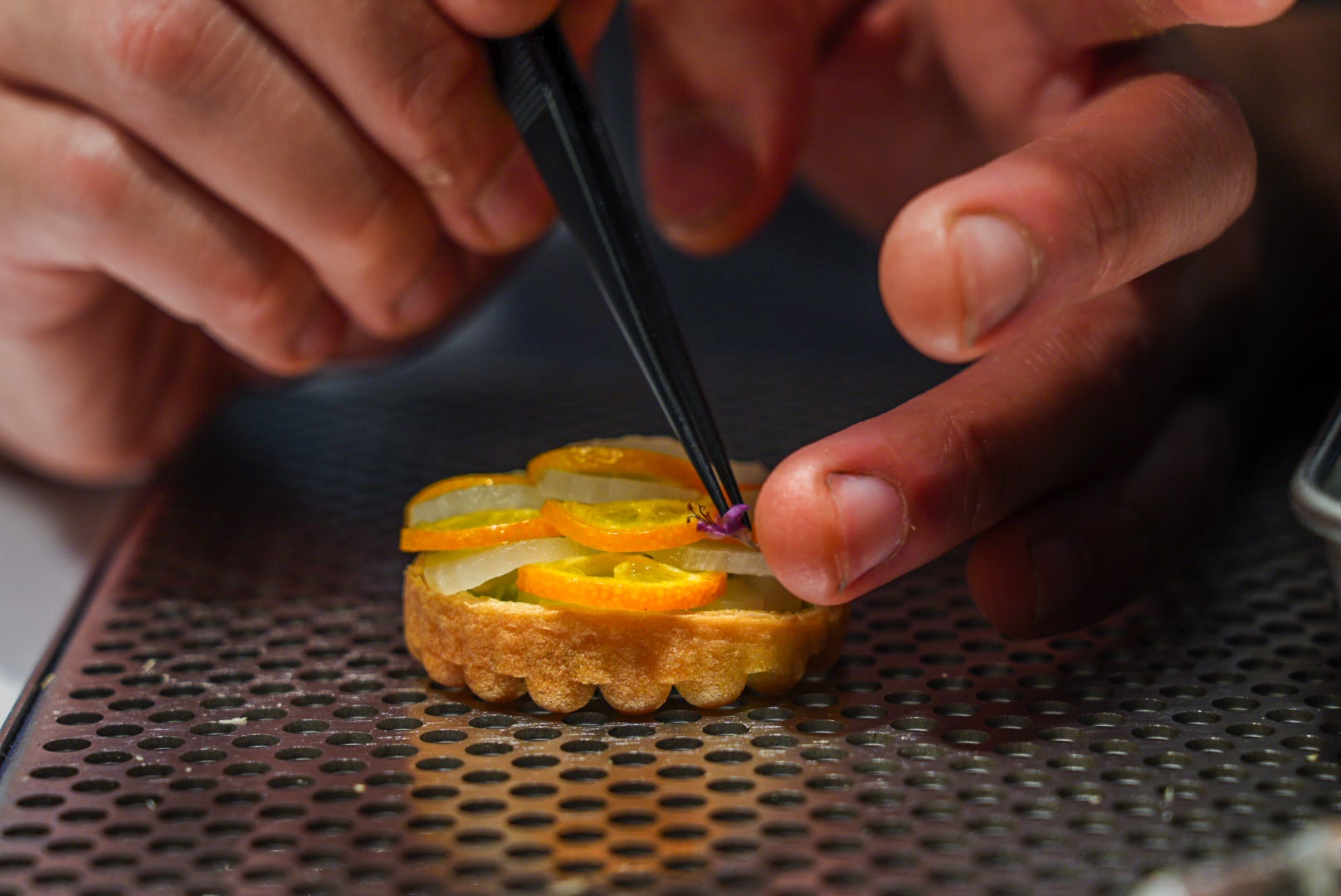
Over the last decade, monaka has evolved far beyond dessert counters. Leading chefs in Tokyo, Paris, and Copenhagen now use it as a refined vessel for amuse-bouches – pairing the fragile shell with caviar, foie gras, or seafood tartare.
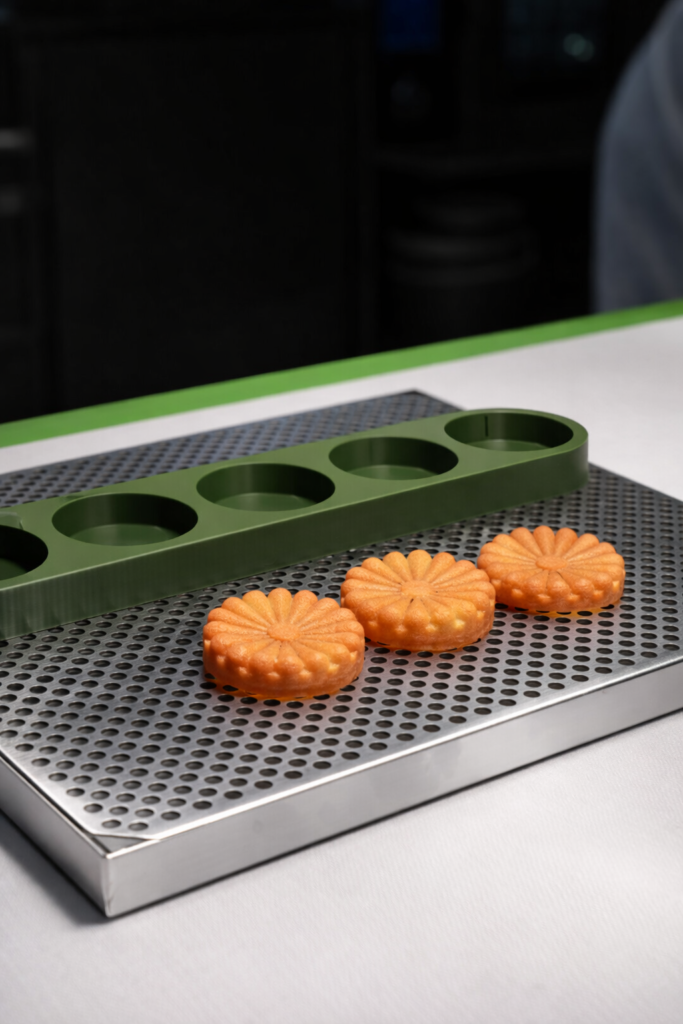
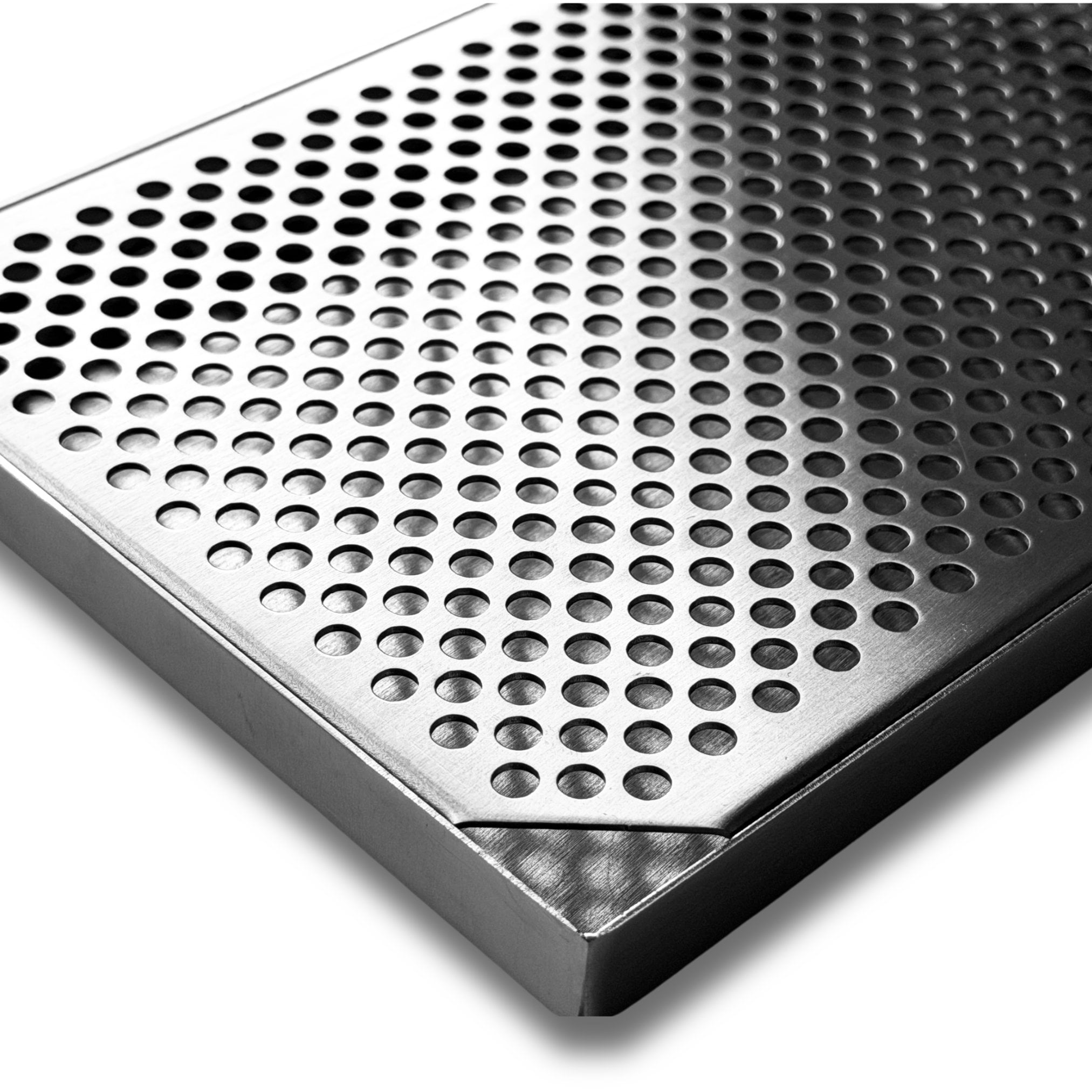
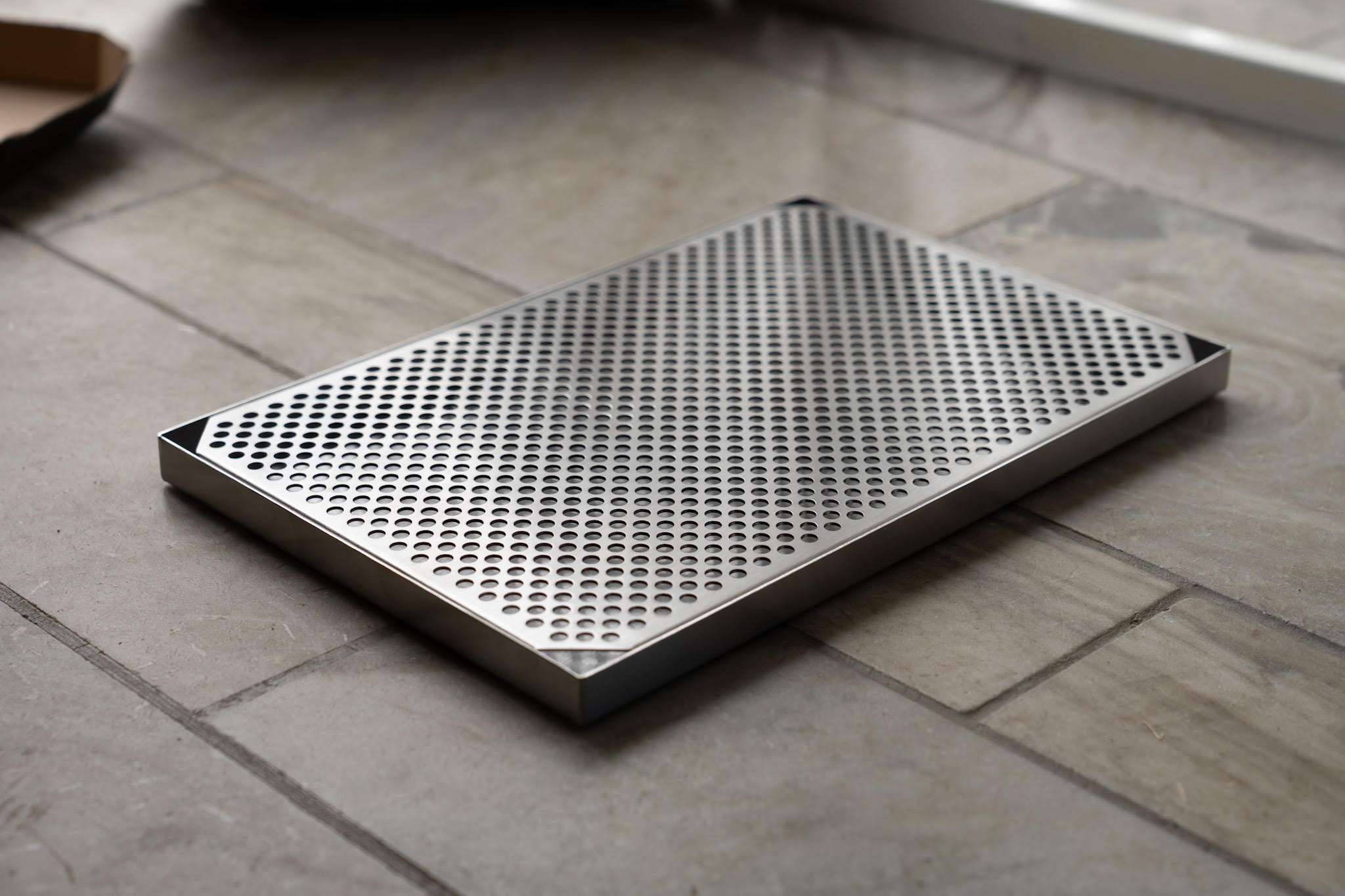
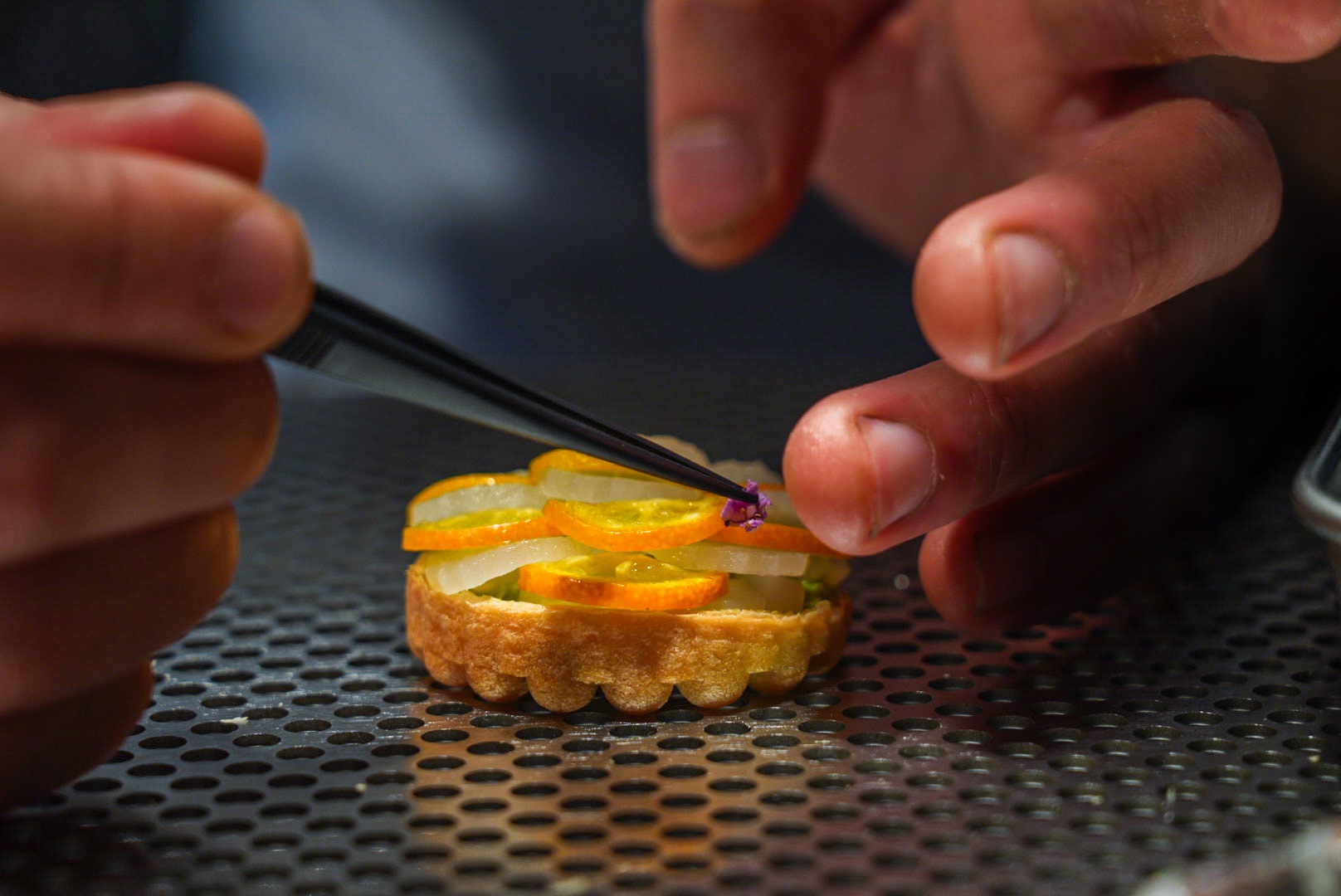
In this context, presentation becomes just as important as texture. The finished monaka is often plated on a afwerkbladen to highlight its clean shape and delicate structure. The flat, minimal surface allows chefs to present the shell with precision — whether serving directly to guests or finalizing dishes in an open kitchen.
The Art of Monaka Shell Shape
Traditional monaka are round or fan-shaped, but contemporary chefs are redefining the format to suit modern plating.
The Nordic Chefs silicone tartelette mold
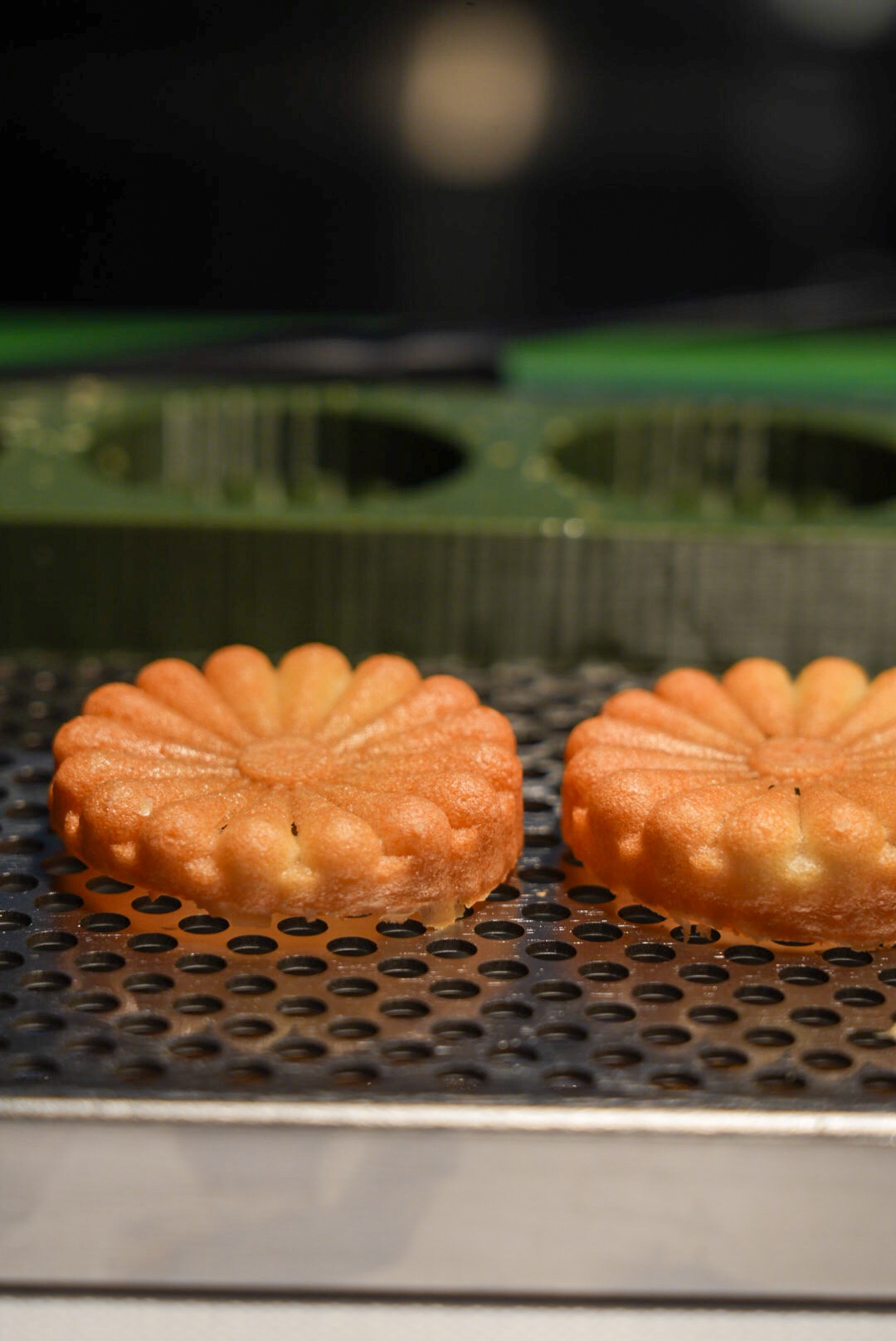
creates a shallow dome with a fine rim — ideal for precision work and consistent presentation.
- Thickness: 1.5–2 mm (crispy yet stable)
- Diameter: 4–5 cm for amuse-bouche; 7 cm for dessert
- Colour: Light gold — avoid browning, which adds bitterness
Consistency in thickness and shape is essential. It ensures even baking, clean structure, and the signature snap that defines a perfect monaka shell.
CREATE the Perfect Monaka Shell
To master monaka, you must first master the shell.
Texture is everything — the thin crispness that shatters between your fingers, the delicate aroma of toasted rice, and the balance between fragility and control.
In professional kitchens, this level of precision often comes down to the tools used. Working with a high-quality
silicone monaka mold
ensures consistent thickness, clean edges, and reliable results across batches.
While monaka is traditionally baked rather than fried, some chefs explore similar structural ideas through other techniques — such as croustades — when working with different textures and applications.
For chefs looking to go further, Nordic Chefs also develops
custom molds and tools tailored to specific shapes, textures, and plating styles.