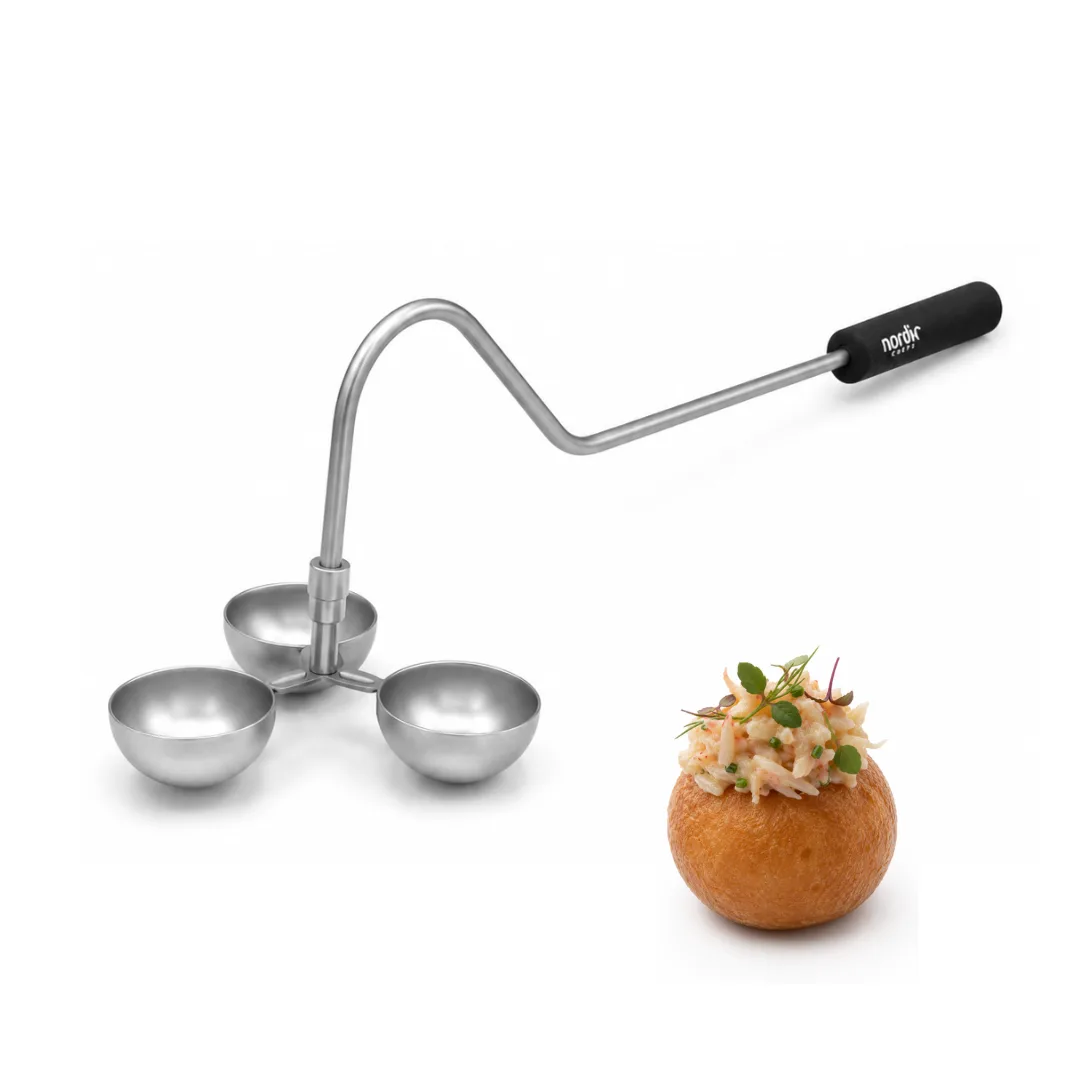
If you’re looking for the full beignet soufflé recipe, including exact measurements and step-by-step instructions, read our complete recipe guide here.
Quick Overview: How to Make Beignets with a Beignet Iron
To make beignets with a beignet iron:
- Heat the iron in oil (175–180°C)
- Hold the iron in the oil and pipe batter from the siphon directly into it
- Let the batter rise into a round shape, then remove the iron and let the beignet finish in the oil
- Drain and finish immediately
Why a Beignet Iron Changes the Technique
Most home beignet recipes rely on a spoon, scoop, or piping bag to portion the batter — and that’s usually where things go wrong. Uneven portions fry unevenly: some beignets end up dense in the middle while others turn out flat or greasy. A beignet iron solves this by giving every portion the same shape and surface area, so heat reaches the batter the same way every time. This guide walks through the exact technique for consistent results, whether you’re making one batch or running it through a full dinner service.
Step-by-Step Technique
Step 1: Prepare a Stable, Aerated Batter
Whip the batter in a siphon and charge it with nitrous oxide, then let it rest in the refrigerator for 10–15 minutes before frying. A batter that hasn’t had time to stabilize will be unpredictable in the oil — some portions will collapse, others will hold air unevenly. Cold, rested batter fries more consistently than batter used straight after charging.
Step 2: Preheat the Iron Fully
Hold the beignet iron in the hot oil for 20–30 seconds until it reaches the same temperature as the oil. If the iron is cooler than the oil, the batter will stick to the mold instead of releasing cleanly once it’s cooked.
Step 3: Pipe the Batter Into the Submerged Iron
Keep the iron down in the hot oil and pipe the batter directly from the siphon into the mold while it’s submerged — don’t lift the iron out to fill it. The batter will rise slowly on its own and settle into a round shape as it cooks.
Step 4: Remove the Iron and Let It Finish
Once the batter has risen and set into its round shape, lift the iron out and let the beignet finish frying loose in the oil. Removing the iron too early, before the shape has set, is the most common reason beignets end up misshapen.
Step 5: Control Your Oil Temperature
Oil temperature is where most inconsistency comes from:
- If your beignets turn out flat or greasy, the oil is too cold — the batter is soaking up oil before it can set.
- If they’re browning too fast but dense or raw in the middle, the oil is too hot — the outside is cooking faster than the inside can catch up.
- If they’re not rising or puffing, check both your oil temperature and whether the batter had time to rest after charging.
Aim for a steady 175–180C and let it recover between batches rather than frying back-to-back without checking it.
Step 6: Drain and Finish Immediately
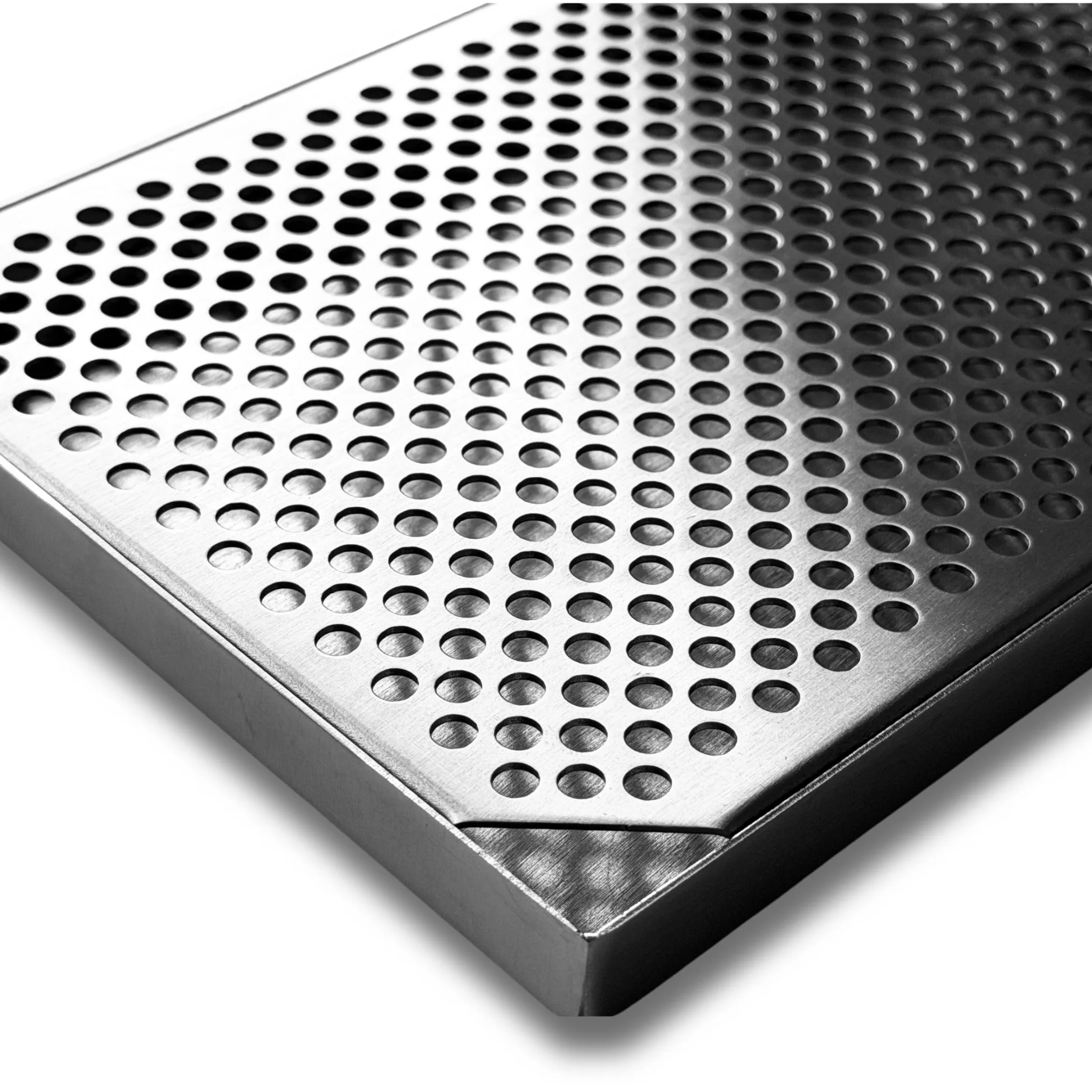
Move beignets straight from the oil to a Finishing Tray rather than resting them on paper towel, which traps steam and softens the shell. Finish and plate within minutes — beignets lose their texture fast once they leave the oil.
Common Beignet Problems, Solved
Why are my beignets flat?
Almost always oil temperature. If the oil is too cold when the batter goes in, it won’t set fast enough to hold its shape.
Why are my beignets dense?
Usually an under-rested batter or oil that’s too hot on the outside before the inside cooks through. Give the batter time to stabilize after charging, and check your oil temperature with a thermometer rather than guessing.
Why aren’t my beignets puffing up?
This is a batter aeration problem — either the siphon wasn’t charged properly or the batter didn’t rest long enough to distribute the charge evenly.
Why do my beignets stick to the iron?
The iron wasn’t fully preheated, or the batter was piped over the top edge of the mold. Make sure the iron is fully hot before you start piping in batter.
Final Thoughts
Consistent beignets come down to three things: batter temperature, iron temperature, and oil temperature. Once you’ve got those under control, the rest of the technique holds up under service pressure — not just in a test batch. If you want to put this technique into practice, our full Beignet Soufflé recipe walks through exact measurements and timing, or explore the Nordic Chefs Beignet Iron set built for this exact technique.