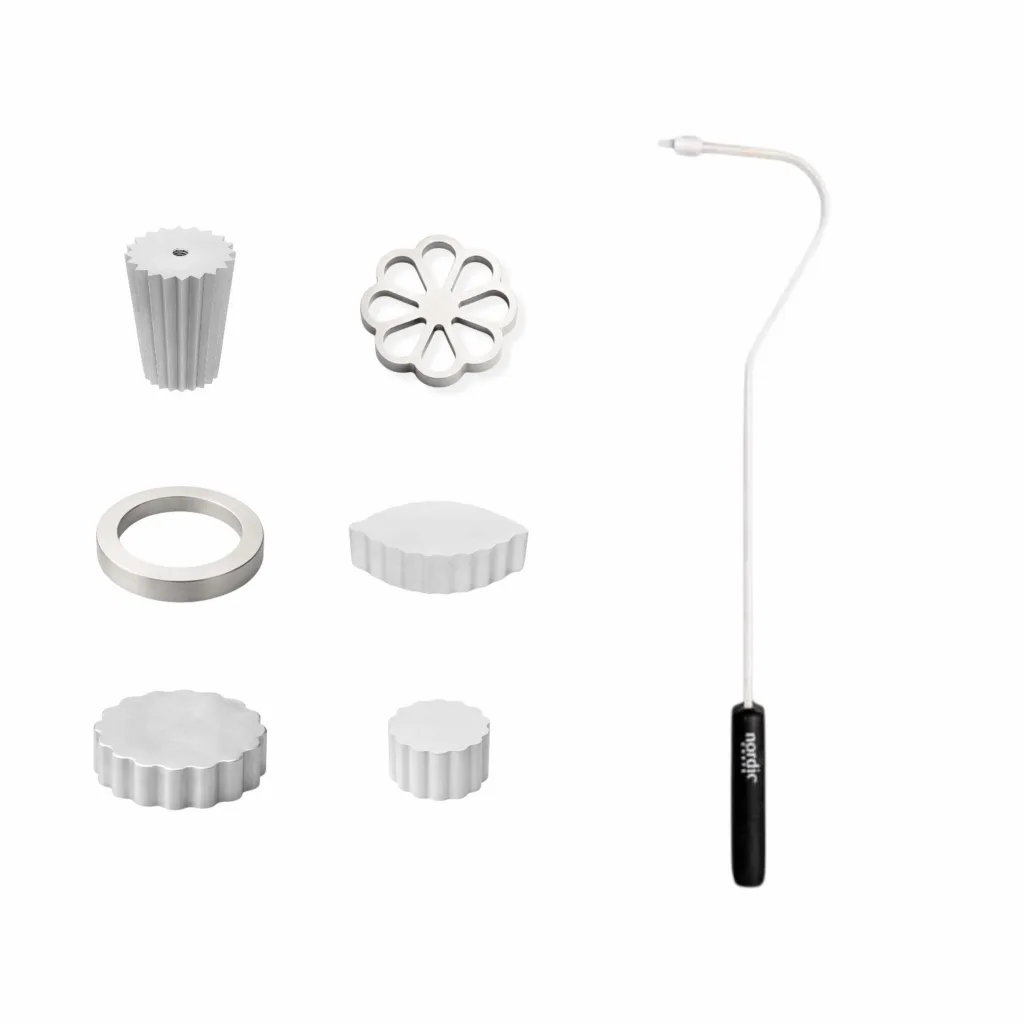
Pie tee, croustade, rosette and buñuelo are often mentioned around the same family of metal molds, but they are not interchangeable names for exactly the same food. The terms come from different culinary traditions and can describe different shapes, batters and ways of serving a crisp shell.
For professional chefs, the practical overlap is important: several of these shells can be made with a heated metal mold or iron, and a modular system makes it possible to change the shape while keeping the same basic production method.
Quick Comparison
| Term | Typical form | Common technique | Professional use |
|---|---|---|---|
| Pie Tee | Small open cup or top-hat shell | Heated mold dipped in batter, then fried | Filled canapé or snack |
| Krustade | Crisp shell in many shapes | Often formed on a heated iron in modern fine dining | Amuse-bouche, snack or filled shell |
| Rosette | Thin patterned or floral fried pastry | Rosette iron heated in oil, dipped in batter and fried | Crisp pastry, garnish or shell |
| Buñuelo | Broad family of fried pastries; molded versions vary | Technique varies; buñuelos de molde use a metal mold | Sweet or savoury fried pastry and modern shell work |
What Is Pie Tee?
Pie tee is a Peranakan/Nyonya crisp pastry shell associated with Singapore and Malaysia. The classic shell is a small open cup, often described as a top-hat shape. A metal pie tee mold is heated in oil, dipped into batter without covering the top edge, and returned to the oil so a thin layer fries around the mold before releasing.
The traditional shell is designed to hold a filling. In a professional kitchen, the same principle can also be used as a starting point for modern canapés and amuse-bouches. Follow our Pie Tee shell recipe for a complete batter, frying method and troubleshooting guide.
Nordic Chefs’ Pie Tee / Croustade form is the interchangeable head for this cup-style shell. For a very different interpretation, Chef Arnis uses a frozen iron rather than hot oil in his cold-set apple vinegar pie tee shell.
Hvad er en krustade?
Krustade is historically a broader culinary term for a crisp pastry or bread-based case. In contemporary fine dining, the word is also commonly used for thin shells formed around a metal iron and then filled as a snack or amuse-bouche.
The Nordic Chefs system uses interchangeable heads to create different croustade shapes on the same Single, Double or FiveMount platform. The emphasis is less on one traditional silhouette and more on producing a consistent crisp shell in the shape required for the dish.
For the full method, use our Trin-for-trin opskrift på croustader. For terminology and broader use, see Hvad er en krustade?.
What Is a Rosette?
A rosette is a thin fried pastry made with a patterned metal iron. The iron is heated, dipped into batter and returned to the hot oil. As the batter cooks, it takes on the pattern of the mold and releases as a light, crisp pastry.
Rosette irons are traditionally associated with decorative shapes, often floral or geometric. In fine dining, the same technique can be adapted for savoury shells and one-bite snacks.
See Chef Eric Vildgaard’s Opskrift på buñuelos med rosette iron, or compare the Rosette Form with the complete 6-Piece Rosette Iron & Buñuelo Mold Set.
What Is a Buñuelo?
Buñuelo is a much broader term than rosette or pie tee. Across Spanish-speaking countries it can refer to many types of fried dough or batter. The shape and recipe vary significantly by region.
For Nordic Chefs, the most relevant overlap is the molded style often described as buñuelos de molde: thin batter is formed on a heated metal mold before frying. This is why searches for buñuelo molds and rosette irons can lead to very similar tools even though the culinary traditions are not identical.
For frying consistency, see our professional oil guide for buñuelos and rosettes.
Can the Same Iron Make Different Shells?
Often, yes. The handle and production principle can be shared while the mold determines the final geometry. Nordic Chefs’ Croustade & Rosette Iron system is built around interchangeable molds so a kitchen can move between croustade, rosette, pie tee and buñuelo-style shapes without purchasing a completely new handle for every design.
The important distinction is culinary rather than mechanical: changing the mold does not automatically turn one traditional recipe into another. Batter, shell thickness, frying method and intended filling should still follow the recipe or technique being used.
Which Tool Should a Chef Choose?
- Choose a Pie Tee / Croustade Mold when you need an open cup designed to hold a filling.
- Choose a Rosette Mold when the patterned fried shape is central to the presentation.
- Choose a Rosette/Buñuelo Set when you want several interchangeable fried-shell shapes in one system.
- Choose Double or FiveMount when production speed and repeatable output are more important than single-shell control.
If the required shape does not exist, Nordic Chefs also develops custom croustade, pie tee, rosette and buñuelo molds for professional kitchens.
One Family of Techniques, Different Culinary Traditions
The useful connection between these terms is the shared idea of creating a thin, crisp form around a tool. The difference is in the culinary tradition, the batter, the shape and the way the finished shell is served.
For an overview of the wider Nordic Chefs range, including 3D silicone molds, tuiles, tartelettes, cutters and precision utensils, visit our Professional Food Shaping Tools for Chefs hub.