
Pig’s Blood Croustade Batter – Professional Recipe
Nordic Chefs teams up with former Michelin chef In collaboration with Marcus Jernmark, Nordic Chefs has developed the Royale Croustade Mold - a tool designed for precision, consistency, and control in modern kitchens. The mould is engineered with horizontal lines inside the shape, which become…

Tools for this recipe
The equipment linked below uses the current Nordic Chefs product options, prices and availability.
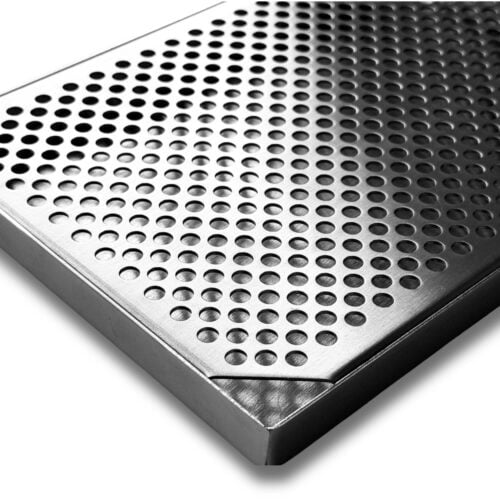
Finishing Tray – Medium
Use the existing Nordic Chefs product page for current options, compatibility, price and availability.
På lager
Add to cartProduct details
Royale Croustade – Double Iron
Use the existing Nordic Chefs product page for current options, compatibility, price and availability.

Royale Croustade Mold
Use the existing Nordic Chefs product page for current options, compatibility, price and availability.
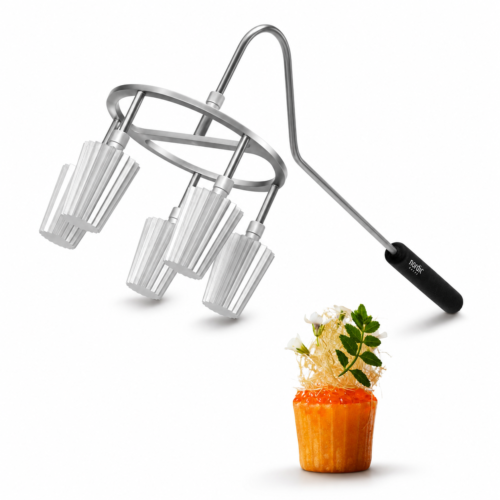
FiveMount Croustade Iron
Use the existing Nordic Chefs product page for current options, compatibility, price and availability.
Pig’s Blood Croustade Batter
Ingredients and method from the original Nordic Chefs recipe.
Print recipeIngredients
- 200 g cake flour
- 60 g dark rye flour
- 270 g beer
- 150 g water
- 100 g pig’s blood
- 12 g sugar
- 12 g salt
- 20 g melted butter
- 100 g whole egg
Method
- How to make croustade shells (Step-by-step)
- Combine beer, water, sugar and salt
- Add flours and whisk until smooth
- Add pig’s blood and mix fully
- Whisk eggs and incorporate
- Add melted butter
- Pass through a fine sieve
- Let batter rest
- Dip Royal mold → batter → fry at 160°C
Nordic Chefs teams up with former Michelin chef
In collaboration with Marcus Jernmark, Nordic Chefs has developed the Royale Croustade Mold - a tool designed for precision, consistency, and control in modern kitchens.
The mould is engineered with horizontal lines inside the shape, which become visible in the finished croustade. These lines are not just visual — they are functional. They help chefs distribute fillings evenly, ensuring balance in every bite.
At the same time, the mould features vertical lines on the exterior, designed to improve release during frying. This reduces sticking and allows for a cleaner, more reliable production — especially important in high-volume service.
Combined with this specific batter, the result is a croustade with a firmer and more dense structure. The addition of pig’s blood gives the shell enough strength to handle advanced finishing techniques.
This means you can grate or refine the top of the croustade after frying without it shattering — creating a perfectly even surface, ideal for precise plating in fine dining.
Who is Marcus Jernmark?
Marcus Jernmark is a former executive chef of Frantzén and now owner of Restaurant Lielle in Los Angeles.
Known for his precision and modern fine dining approach, his recipes focus on consistency, structure, and efficiency in professional kitchens.
What is a croustade?
A croustade is a light, crispy shell used in professional kitchens for both savory and sweet applications. It is typically made using a croustade iron, dipped in batter and fried to create a delicate, structured shell.
Unlike traditional tart shells, croustades are thinner, more refined, and designed for high-end plating.
How to make tart shells vs croustades
If you are searching for how to make tart shells, the process is completely different.
- Tart shells = baked dough
- Croustades = fried batter using an iron
Croustades are:
- faster in service
- more consistent
- ideal for high-volume kitchens