¿Se puede hacer un postre con langosta?
Sí, el bogavante puede utilizarse en postres, sobre todo en la alta cocina, donde los ingredientes salados suelen equilibrarse con elementos dulces.
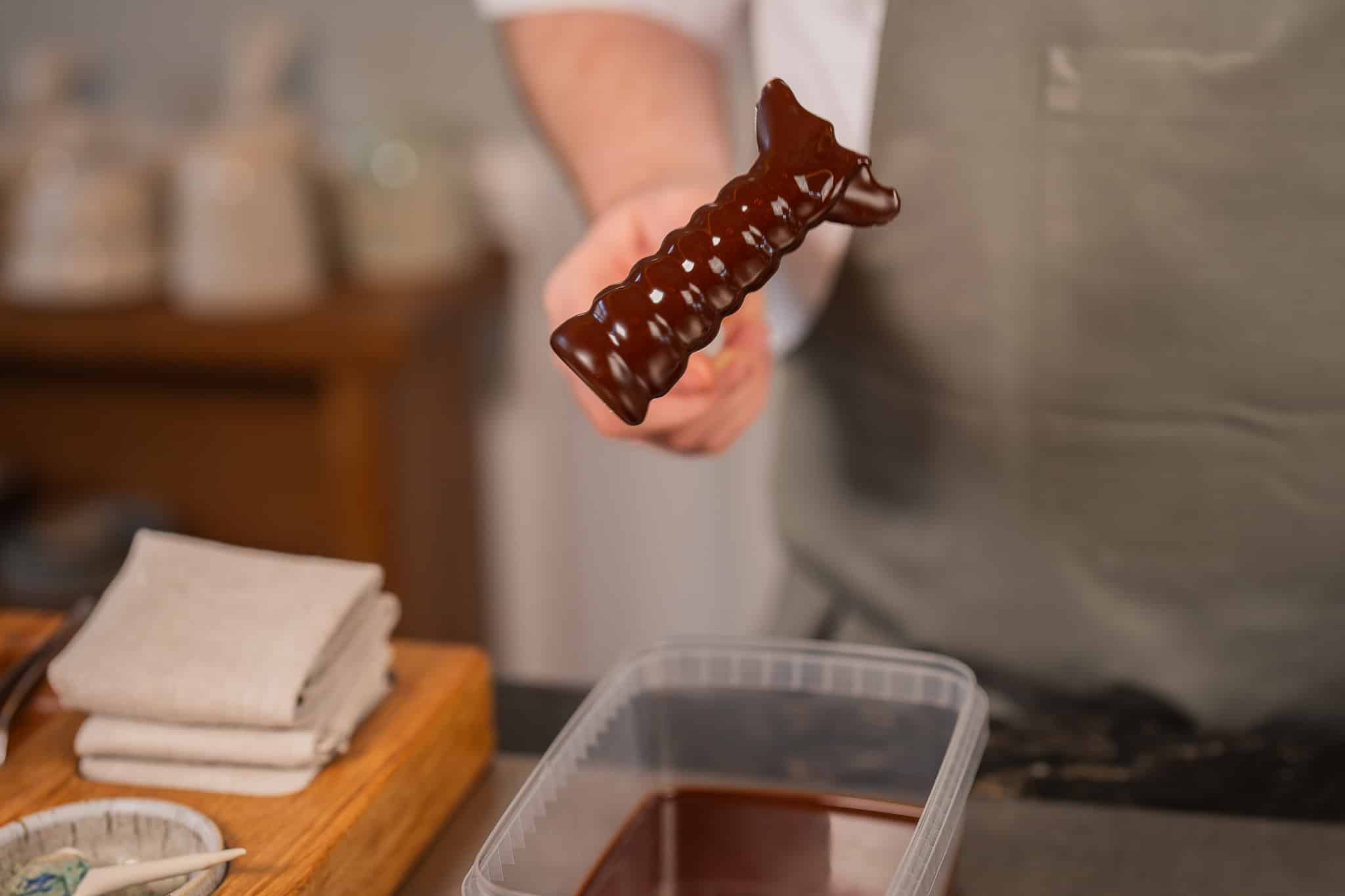
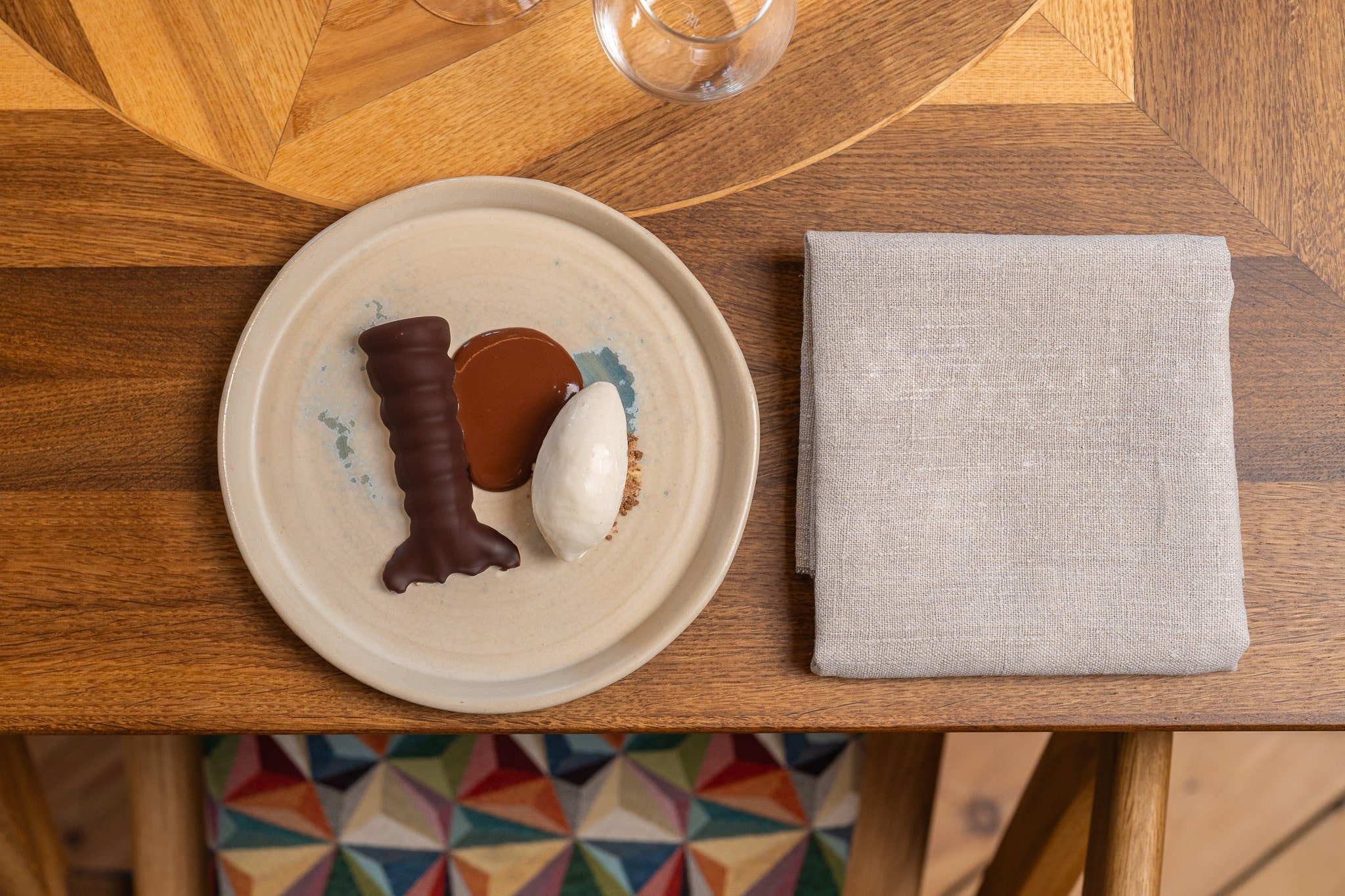
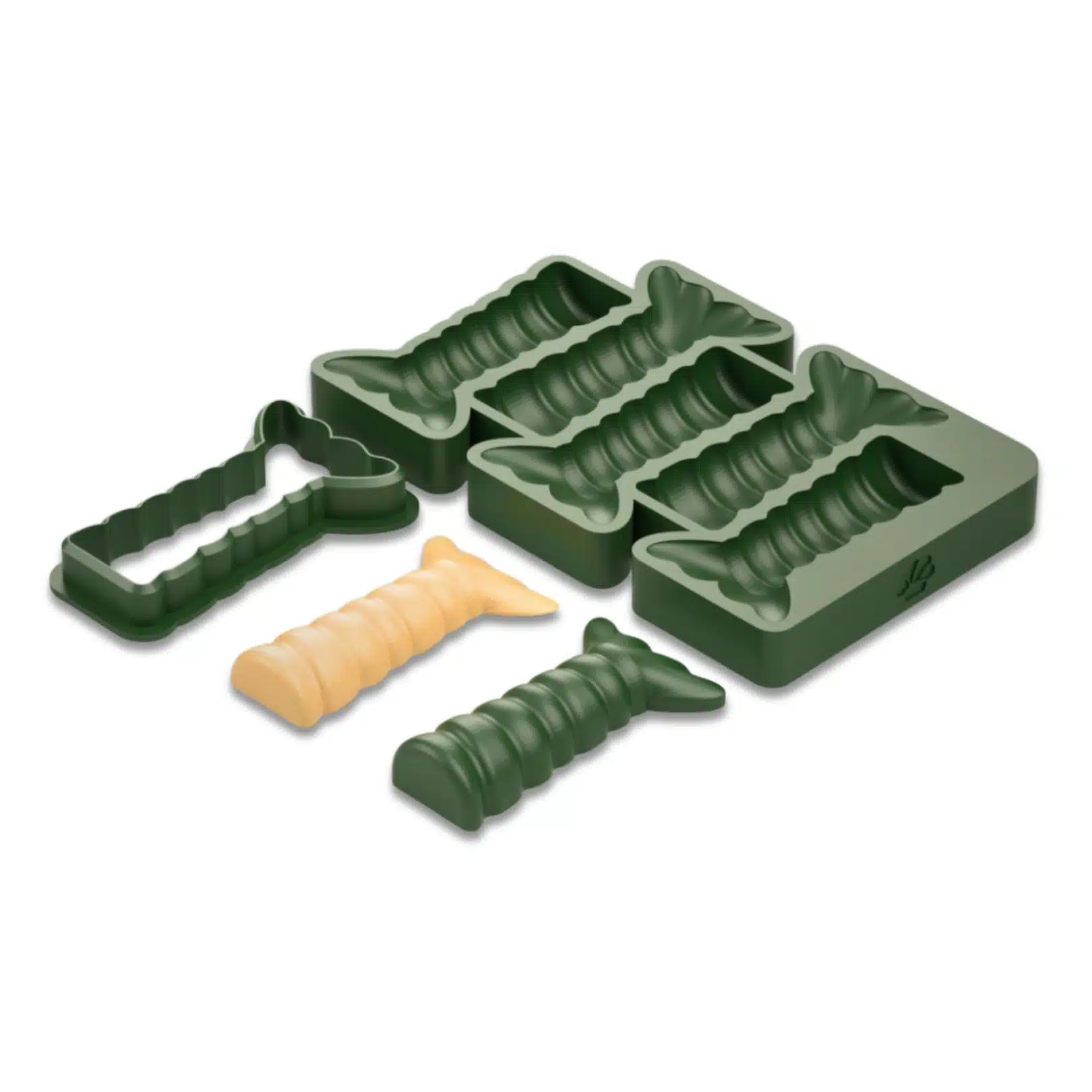
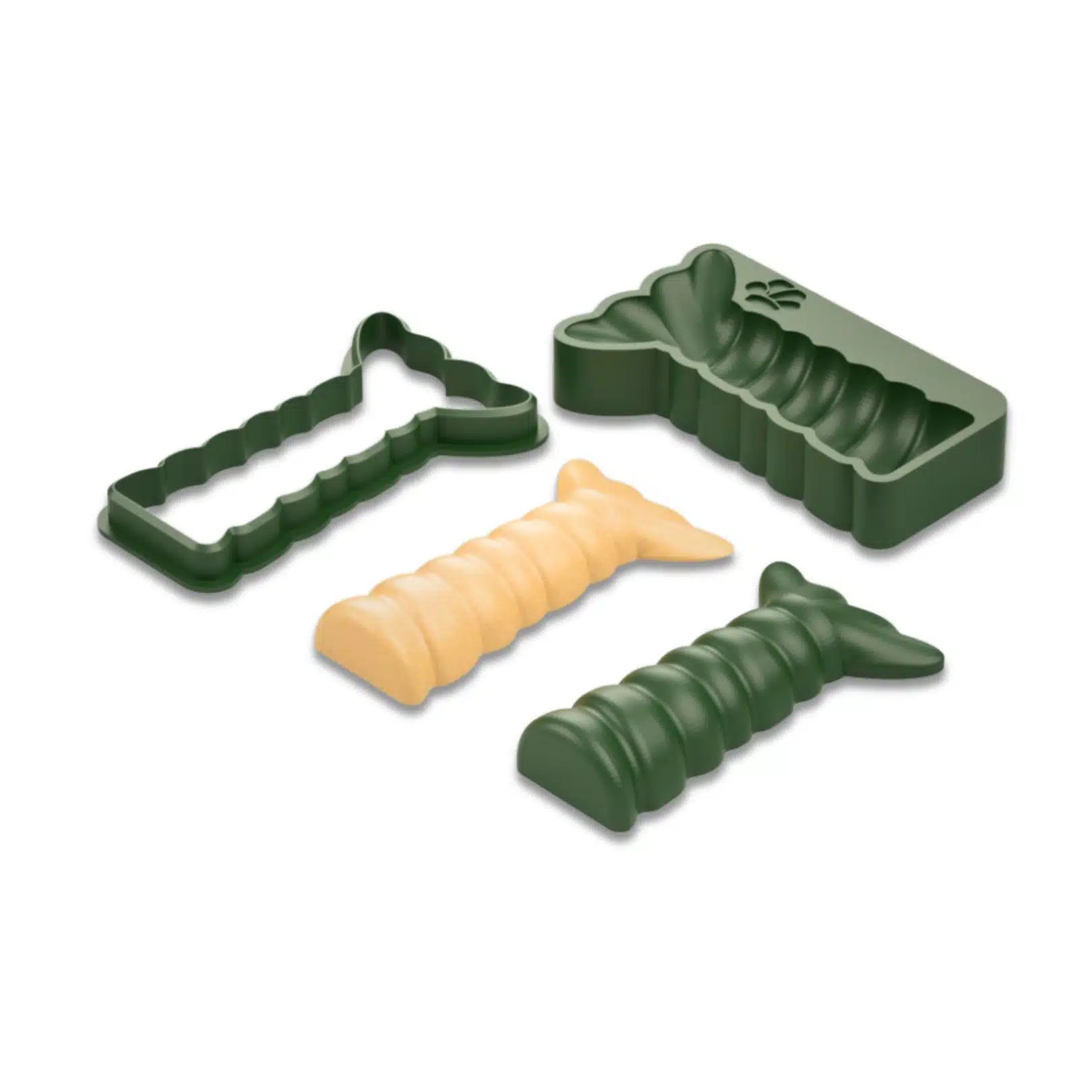
In this Michelin recipe from Restaurant MOTA, the lobster is infused in chocolate, while also being incorporated in the sauce using lobster stock. Using a lobster tail mold just enhances the concept of the lobster.
The result is an award-winning dessert with depth & umami — something you’ve probably never tasted before!
¿Qué es una quenelle en el emplatado de postres?
A quenelle is an elegant oval scoop, typically used for serving ice cream, mousse, or cream.
It’s formed with one or two spoons – or a specially designed quenelle spoon – to create a smooth, symmetrical shape.
In this recipe, almond ice cream is served as a quenelle to elevate the visual appeal and match the fine-dining presentation. It’s a skill that requires practice and the correct quenelle spoon to master!
¿Es un postre sin hornear?
Sí, es completamente sin hornear.
The yogurt parfait sets in the freezer, the ice cream is churned separately, and the chocolate shell is added while the parfait is still frozen.
Simply dip the tail of the lobster mold directly into the tempered chocolate. It’s perfect for chefs who want to avoid oven prep but still create a fantastic, restaurant-level dessert.
Más preguntas sobre este postre de bogavante
1. Why is blast freezing important in dessert preparation?
Blast freezing locks in texture and detail by rapidly freezing components like parfaits and mousses.
It’s ideal when using silicone molds, as it ensures clean release and structural precision. At Restaurant MOTA, a Mercatus blast freezer was used to prepare this lobster dessert.
2. How do you get a clean chocolate coating in frozen desserts?
To achieve a clean, even chocolate shell, the parfait must be deeply frozen.
The chocolate should be tempered or balanced with cocoa butter to prevent cracking. Dip quickly and let the excess run off.
This lobster dessert uses a shell made from chocolate infused with lobster shells.
3. Why use almond ice cream in this lobster dessert?
La almendra aporta una riqueza de frutos secos que complementa tanto el yogur como elementos salados como la langosta y el chocolate.
Its natural fat content gives a silky mouthfeel that balances the dessert and highlights Nordic flavor principles.
4. What kitchen utensils do you need to make this lobster dessert?
You’ll need a quenelle spoon kit, lobster silicone mold, and precise plating tweezers to recreate the Michelin-level presentation.


 English
  Danish
  French
  Swedish
  Dutch
Dutch  Spanish