
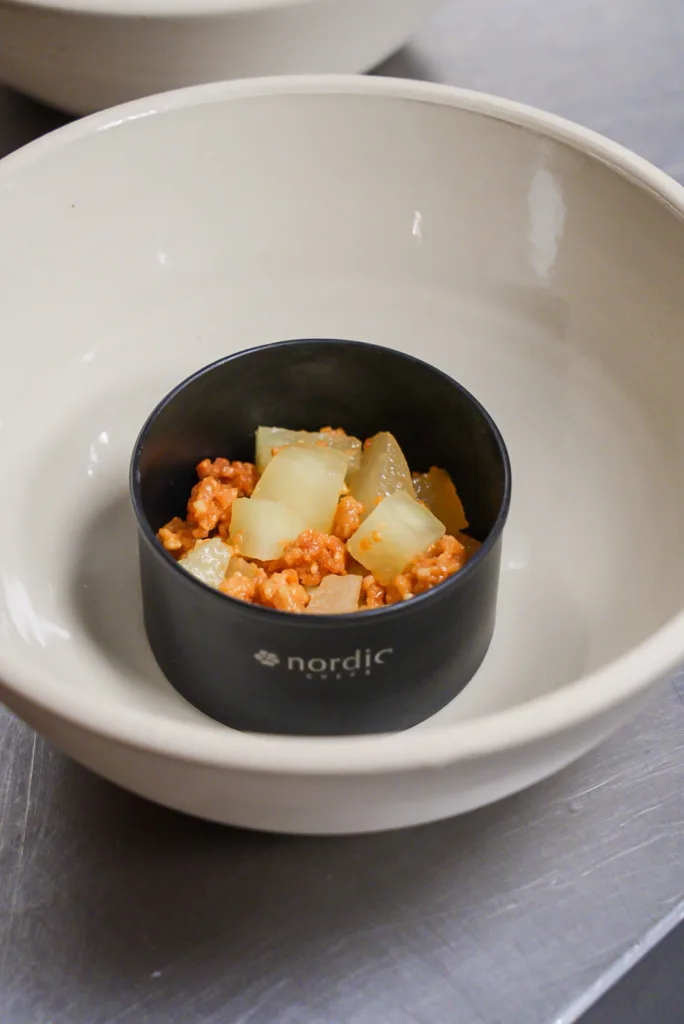
To use a ring cutter for plating, place it on the plate, add your prepared ingredients and press gently to create an even portion. Lift the ring straight up while keeping the food in place. For cutting, press the ring vertically through the ingredient on a suitable cutting board. Choose a ring size that matches the portion and clean it between uses for neat edges.
How to Use Ring Cutters for Clean, Modern Plating
In a professional kitchen, precision is everything. From prep to plating, small tools make a big difference. One of the simplest, yet most powerful tools in modern plating is the ring cutter. With it, chefs can create structure, control portions, and present food that looks clean, intentional, and elegant. Here’s how you can master this tool in your own kitchen.
Why Plating Matters in a Professional Kitchen
Presentation isn’t just about beauty — it’s about control. A clean plate shows attention to detail, consistency in portioning, and pride in your work. In fast-paced service, a good plating tool can help speed things up while keeping standards high. That’s where the ring cutter earns its place.
Unlocking the Secrets of the Ring Cutter Tool
The cutter is a simple, circular mold. It allows chefs to shape ingredients into neat, uniform rounds. You can find ring cutters in various sizes and heights. Stainless steel is durable and easy to clean, making it a smart choice.
With a plating ring, you control the shape and footprint of each portion. Use it for tartare, layered vegetables, grains, desserts and other components that benefit from a clean circular edge. The ring supports the food while you build the portion, then lifts away before final garnish.
Ring cutters also keep portions consistent. This is key for large service or tasting menus. Uniform portions cook and plate evenly. Whether you’re plating a salad or dessert, the ring cutter guarantees visual harmony.
Nordic Chefs cutter systems are designed for repeatable portioning in professional kitchens. Pair a ring with the matching Cutter Press Kit when you need to compress or level the component before lifting the ring.
Step-by-Step Guide to Flawless Plate Presentation
Start by selecting the right size ring cutter for your dish. Too large and your portions may look sparse; too small and they may overflow. Lightly oil the inside of the ring with a neutral oil, or line it with acetate if you’re working with sticky ingredients. Place the ring firmly on the plate where you want the food to sit.
Layer your ingredients inside the ring with care. Press gently with a spoon or tamper to compact each layer, especially with loose items like rice or diced vegetables. For layered effects, alternate colors and textures. Always wipe the edges of the ring before removal to avoid smudges or drips on the plate.
Slowly lift the ring straight up. If ingredients cling, tap lightly or run a thin knife around the inside edge. Garnish the top or plate around the stack to enhance visual appeal. Use sauces sparingly to let the clean shape stand out. Precision and restraint make your presentation memorable.
Why Consistency Is Key in Service
In a restaurant, the guest at table 4 should get the same plate as the guest at table 12. Ring cutters help keep portions uniform — not just in size, but in shape and presentation.
Consistent portioning also means:
- Faster prep and service
- More accurate food costs
- Better balance across the plate
- Less waste and re-plating
With a good ring cutter set, your team doesn’t need to guess. Each dish comes out balanced and repeatable.
Common Mistakes When Using Ring Cutters
Even a small misstep can ruin the look of a clean dish. Here are the most common mistakes — and how to avoid them:
- Overfilling the ring
Pressing too much food into the ring causes overflow and messy edges. Always leave a few millimeters of space at the top. - Wrong choice of ingredients
Very wet or oily components can collapse when the ring is lifted. Use ingredients that hold their shape, or chill them slightly before building. - Lifting too quickly
The slower you lift, the cleaner the edges. A quick pull often drags parts of the stack upward. - Using the wrong size ring
Too large, and your plate will feel empty. Too small, and it won’t make visual impact. Size should match the balance of your plating layout. - Forgetting to clean the ring
Food residue from previous uses will leave smudges. Always wipe down before every use — especially when plating multiple dishes in a row.
Creative Plating Ideas with Ring Cutters
Ring cutters go beyond perfect stacks. Here are a few ways chefs use them for visual impact:
- Tartare or ceviche rounds
Shape raw preparations with a slight press for clean edges and a fresh look. - Layered appetizers
Stack roasted vegetables, spreads, or grains into small towers for tapas or tasting menus. - Dessert plating
Create mousse stacks, compressed fruit, or cheesecake bases with sharp lines and symmetry. - Salads or composed sides
A basic cucumber or tomato salad becomes elegant when shaped and garnished right. - Breakfast presentation
Use a ring to hold scrambled eggs or hash on the plate — great for brunch menus or bistro-style service.
You can also freeze ingredients inside the ring, then release them just before plating. This method works well for shaped sorbets or molded parfaits.
Ring Cutter vs Cutter Press
A ring cutter defines the outside shape of the portion. A press adds controlled downward pressure inside the ring, which is useful for compacting tartare, caviar, layered preparations and other components that need a level, repeatable finish. The Cutter Press Kit combines eight ring sizes with matching presses so the two steps work as one system.
If you only need clean cutting or an outline, a ring set may be enough. If your workflow also depends on compression and consistent height, a matched ring-and-press system is the more controlled option. Compare the full professional cutter collection or browse our wider food shaping tools for chefs.
Final Thoughts
A ring cutter is more than a kitchen gadget. With skill, it becomes a tool for creativity and precision. Each plate is your canvas — and this tool helps you bring structure to your ideas.
Like every other piece of gear in a chef’s station, quality matters. A thin or poorly made cutter will stick, bend, or rust over time. That’s why professional kitchens rely on chefs tools made to last.
Explore our professional cutter kits to compare ring sizes, press systems and add-on sets for different plating workflows.


