How to Make Bunuelos with a Rosette Iron – Chef Eric Vildgaard

If you’re searching for how to use a rosette iron, this is the method used in professional kitchens.

In this recipe, Michelin-starred chef Eric Vildgaard from Restaurant Jordnær demonstrates how to create crispy bunuelos using a rosette iron – a classic technique used to form thin, golden shells for both sweet and savoury dishes.

Originally known from traditional Spanish and Latin American cooking, bunuelos have evolved into a modern fine dining snack, where precision, texture, and consistency are essential. Using a professional rosette iron mold, chefs can create perfectly shaped shells that hold fillings such as tartare, cream, or desserts.

This guide shows you step-by-step how to control heat, batter, and technique to achieve consistent, crispy results every time.

What is a Rosette Iron?

A rosette iron is a specialized cooking tool used to create thin, crispy shells by dipping a heated mold into batter and frying it in hot oil.

Also known as a rosette cookie iron or bunuelos iron, it is widely used in both traditional and modern kitchens to produce uniform shapes with a light and crispy texture.

In professional kitchens, the rosette iron is not only used for sweet cookies but also as a tool for creating crispy snack shells, similar to croustades, that can hold both savoury and sweet fillings.

Why Use a Rosette Iron for Bunuelos?

Using a rosette iron mold ensures:

  • Even heat distribution
  • Consistent shell thickness
  • Clean release from the mold
  • Professional, repeatable results

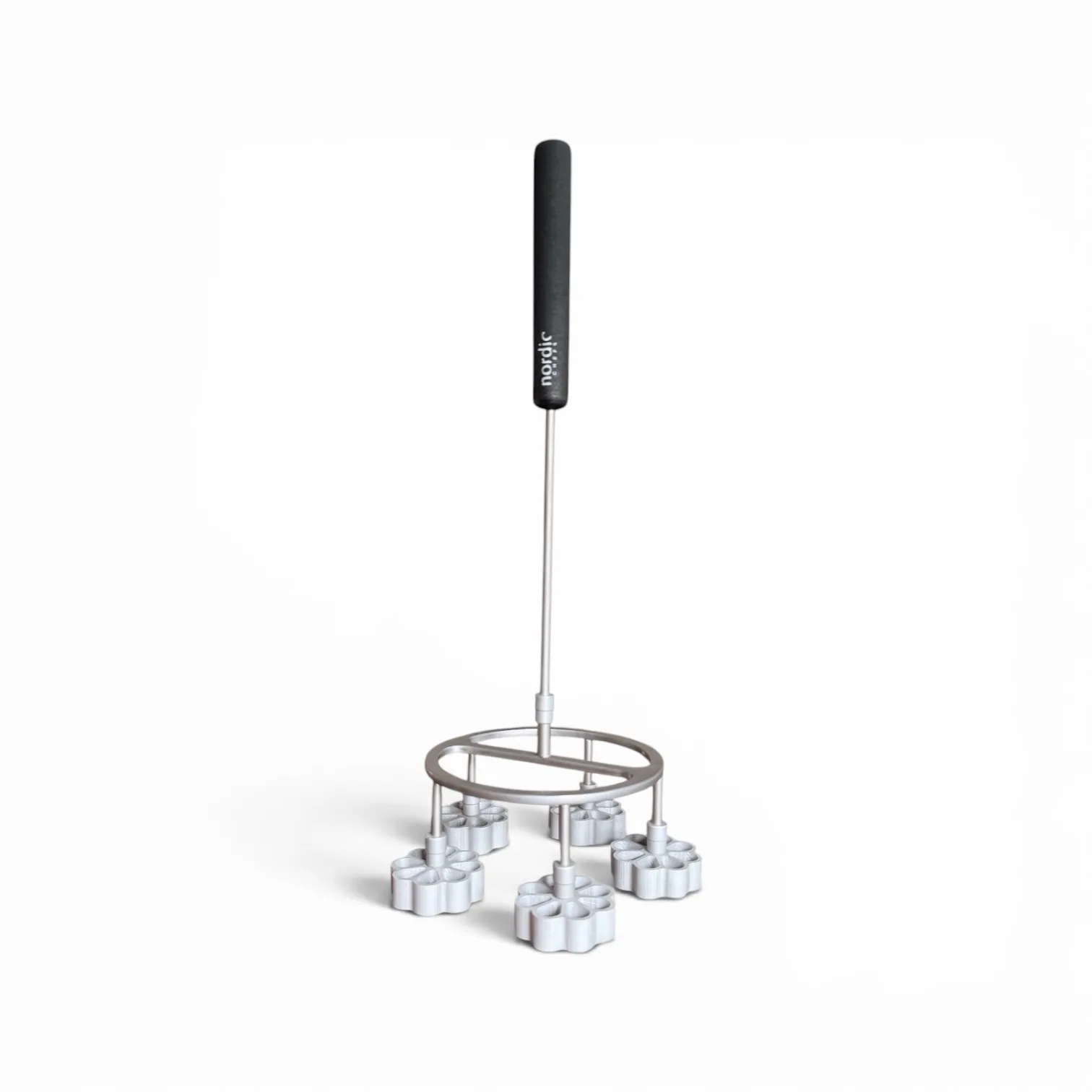
Compared to manual frying methods, a rosette iron allows chefs to produce uniform crispy shells quickly and efficiently – making it ideal for both prep and service. Do you want to create 5 at one time? try our Fivemount Rosette Iron

Rosette Iron vs Croustade Iron

While a rosette iron is used to create thin, light shells like bunuelos, a croustade iron produces thicker, more structured fried shells.

  • Rosette iron → thin, delicate, crispy
  • Croustade iron → thicker, stronger, more filling capacity

Both tools are essential in modern kitchens depending on the desired texture and presentation.

check out our Pig’s bloods Croustade recipe HERE! 

Professional croustade iron – and custom solutions for chefs

To achieve consistent results when working with a croustade recipe, the choice of tool is essential. A professional croustade iron ensures even heat distribution, clean release, and a uniform shell every time – something that is critical in both prep and service.

In modern kitchens, standard tools are often not enough. Different menus, plating styles, and service flows require specific shapes, sizes, and structures. This is where custom development becomes relevant.

At Nordic Chefs, we work directly with chefs to develop custom croustade irons and molds, tailored to their exact needs. This can include:

  • Unique shapes for signature dishes
  • Adjusted thickness for structure and texture
  • Functional details that improve release and consistency
  • Design elements that influence how fillings are distributed

A great example is the Royale Croustade Mold, developed in collaboration with Marcus Jernmark. The design integrates both horizontal and vertical lines to control structure, filling distribution, and release during frying.

If you are working seriously with croustades — whether for snacks, petits fours, or plated dishes – having the right tool is not just an advantage. It is part of the technique.

Explore our custom chef tools and see how your next croustade can be designed around your kitchen, not the other way around.


rosset waffle eric vildgaard

How to Make Bunuelos with a Rosette Iron – Crispy Shell Recipe

Ingredients

  • 230g Manitoba flour
  • 16g fine salt
  • 260g filtered water
  • 160g boiled & cooled beer
  • 5g sugar
  • 215g whole eggs
  • 16g extra virgin olive oil

Instructions

  1. Combine Liquids: In a bowl, mix filtered water, cooled beer, salt, and sugar.

  2. Add Manitoba Flour: Whisk slowly to avoid lumps.

  3. Incorporate Eggs: Beat separately, then gently fold them in.

  4. Add Oil: This gives extra flavor and helps with crispiness.

  5. Strain & Rest: Run through a fine sieve and refrigerate for at least 24 hours.

  6. (Optional) Vacuum Seal: If you have the tools, this removes air bubbles for a smoother texture.

How to Make Bunuelos – Step by Step

Preheat Your Iron
1. Heat your oil to 180–190°C.
2. Place your Rosette Iron in the hot oil for at least 15 minutes. This ensures the iron is thoroughly heated and ready to form a crisp shell.

Dip and Dry
1. Carefully remove the iron from the oil and let excess oil drip off.
2. Dip the iron into the batter—be sure not to submerge it completely.
3. Lift it out and let the batter rest for a minute or two. This slight drying time helps the Bunuelos become even crispier.
4. If you notice any small holes, use your fingertip to dab on a little more batter.

Fry with Caution
1. Gently place the iron back into the hot oil. Some people like to lower it toward the bottom of the pan for an even base, but remember that the oil is hottest at the bottom. Holding it there too long may cause over-frying.

Release and Finish Cooking
1. Once the edges turn golden, carefully shake or nudge the Bunuelos shell off the iron.
2. Let it cook a bit longer on its own in the oil until it reaches your desired color and crispness.
3. Use your prefered tweezer or tongs to remove the Bunuelos and let it drain on paper towels.

Store or Serve
1. At this stage, you can store your Bunuelos in an airtight container in a cool, dry place to keep them crisp.
2. If you’re ready to serve right away, fill them with your favorite sweet or savory ingredients.

Enjoy your homemade Buñuelos with all your favorite fillings!

Rosette Iron & Bunuelos

Rosette Iron

What is a rosette iron?
A rosette iron is a cooking tool used to create thin, crispy shells by dipping a heated mold into batter and frying it in hot oil. It is traditionally used for rosette cookies but is widely used in modern kitchens for bunuelos and fine dining snacks.

How do you use a rosette iron?
Heat the rosette iron in hot oil, dip it into batter without fully submerging it, then return it to the oil to fry. Once the shell turns golden, gently release it from the mold and finish frying until crisp.

Why are my rosettes sticking to the iron?
Rosettes usually stick if the iron is not hot enough or if the batter is too cold. Make sure the iron is fully heated in oil and lightly coated before dipping into batter.

How do you prevent bunuelos from sticking to a rosette iron?
Ensure the iron is properly heated, shake off excess oil before dipping, and allow the batter to set slightly before frying. Proper temperature control is key.

How do you clean a rosette iron?
Let the iron cool slightly, then rinse with warm water and remove any residue with a soft brush. Avoid harsh cleaning tools that may damage the surface.

How do you season a rosette iron?
Seasoning is done by heating the iron in oil before use. This creates a natural non-stick surface and improves release when frying.

What is the best rosette iron?
The best rosette iron provides even heat distribution, clean release, and a balanced handle. Professional chefs prefer lightweight designs that allow precise control during frying.

Where can I buy a rosette iron?
You can buy a professional rosette iron from specialty kitchen tool suppliers. Look for high-quality materials and designs made for consistent results in both home and professional kitchens.

Find your own mold between our 20+ designs HERE! 

What is the difference between a rosette iron and a croustade iron?
A rosette iron creates thin, delicate shells, while a croustade iron produces thicker and more structured fried shells. Both are used depending on the desired texture and application.

Can you use a rosette iron for savoury dishes?
Yes. While traditionally used for sweet rosettes, modern chefs use rosette irons to create crispy shells for savoury fillings such as tartare, seafood, or cream-based preparations.

What are bunuelos?
Bunuelos are thin, crispy fried shells traditionally found in Spanish and Latin American cuisine. They are often served sweet with sugar or syrup, but in modern kitchens they are also used for savoury dishes.

What are bunuelos made of?
Bunuelos are typically made from a simple batter of flour, liquid (water or beer), eggs, and sometimes sugar or oil. The batter is fried using a rosette iron to create thin, crispy shells.

How to make bunuelos?
To make bunuelos, heat a rosette iron in oil, dip it into batter, and fry until golden and crispy. The shell is then released from the mold and finished in the oil.

How do you make bunuelos from scratch?
Making bunuelos from scratch involves preparing a smooth batter, resting it for stability, and frying it with a properly heated rosette iron to achieve a thin, crispy structure.

Nordic Chefs – Full Chefs Texture Utensils Kit

799,00 kr.
View product This product has multiple variants. The options may be chosen on the product page

Rosette Iron – Double Handle

1.190,00 kr.
View product This product has multiple variants. The options may be chosen on the product page

Cutter Press Kit (8pc)

800,00 kr.

FiveMount Small Rosette Iron

3.000,00 kr.
View product This product has multiple variants. The options may be chosen on the product page

Rosette Iron – Single Handle

690,00 kr.
View product This product has multiple variants. The options may be chosen on the product page
Search
×
0